5 days · coral reefs, castles & island time

Okinawa, Japan Itinerary: 5 Perfect Days

Five days in Okinawa gives you Japan's tropical south: Ryukyu kingdom castles and shisa guardian lions, some of the clearest snorkelling water in Asia, and a food culture — goya champuru, Okinawa soba, taco rice — found nowhere else. Base in Naha for the capital's markets and the Kerama Islands day trip, then drive north for the Churaumi Aquarium, Kouri Island's bridge and the jungle coast. Everything is priced in yen (¥), a rental car opens up the north, and the pace is proudly slower than mainland Japan.

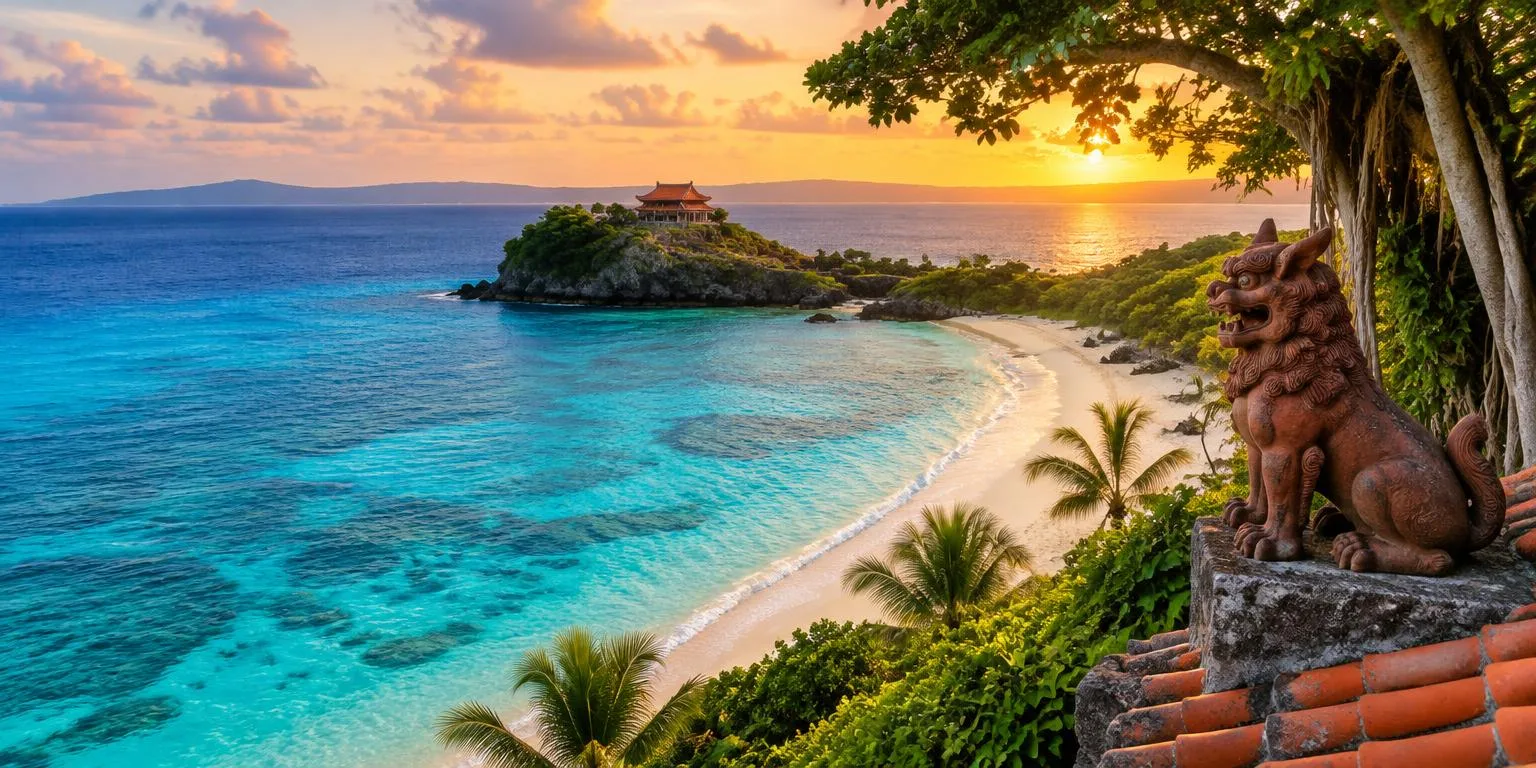
Golden-hour view over a white-sand beach and turquoise coral-reef shallows in Okinawa, Japan, with a red-tiled shisa guardian statue on a Ryukyu roof in the foreground and a small temple-topped island offshore at sunset

Best time to visit

Late April to June and October to November are ideal: warm (24–29 °C), swimmable seas and fewer crowds — though June's rainy season (tsuyu) brings showers that usually pass. July to September is hot, humid and peak beach season, with a typhoon risk worth watching. Winter is mild (15–20 °C) — too cool for most swimmers but fine for sightseeing, and the cherry blossoms bloom in January, Japan's first.

Getting around

Naha has Okinawa's only monorail (Yui Rail, ¥240–370 a ride, day pass ¥800) covering the airport, Kokusai-dori and Shuri. For everything north — the aquarium, Kouri, the beaches — rent a car from Naha airport (from about ¥5,000/day); driving is on the left, gentle, and the coastal Route 58 is the island's spine. Expressway Naha to Nago costs about ¥1,020. Kerama Islands ferries leave from Naha's Tomarin port (from ¥2,160 each way, 35–70 min). Buses exist but are slow; taxis are plentiful in Naha.

The 5-day Okinawa, Japan itinerary

Day 1

Naha: Kokusai-dori, markets and Shuri Castle

  1. Morning

    park free · paid zone ¥400

    Shuri Castle and the Ryukyu kingdom

    Start at the seat of the Ryukyu kings: Shuri Castle's vermilion walls, the Shureimon gate and the cobbled kinjo-cho stone path below it. The main hall is being rebuilt after the fire — the viewing walkway over the reconstruction is itself fascinating.

    Shuri Castle, Naha
  2. Afternoon

    market lunch ¥1,500–2,500

    Kokusai-dori and the Makishi market

    Monorail back to Kokusai-dori, the 'miracle mile': shisa statues, awamori bottles and purple sweet-potato everything. Duck into the Makishi public market — pick your fish downstairs, they cook it upstairs — and the pottery lanes of Tsuboya Yachimun-dori.

    Makishi Public Market, Naha
  3. Evening

    dinner ¥3,000–5,000

    Izakaya night with live sanshin

    Dinner at an Okinawan izakaya with live sanshin (three-string) music: goya champuru, rafute pork belly, sea grapes (umibudo) and a glass of awamori on the rocks. Book a music table for around 7pm.

    Kokusai-dori, Naha
Day 2

The Kerama Islands: snorkelling over coral gardens

  1. Morning

    ferry from ¥2,160 each way · beach free

    Ferry to Zamami or Tokashiki

    Early ferry from Tomarin port to the Kerama Islands — Zamami or Tokashiki, 35–70 minutes out. The water here is so clear it has its own name: 'Kerama blue'. Head straight for Furuzamami or Aharen beach.

    Furuzamami Beach, Zamami
  2. Afternoon

    gear rental ¥1,500 · boat snorkel ¥5,000–8,000

    Snorkel with sea turtles

    Snorkel straight off the beach over coral gardens — green sea turtles graze the seagrass at Ama beach on Zamami at high tide, and the visibility regularly tops 30 metres. Rent gear on the beach or join a boat snorkel trip to the outer reefs.

    Ama Beach, Zamami
  3. Evening

    dinner ¥1,500–3,500

    Last ferry back, dinner in Naha

    Take the late-afternoon ferry back (book the return when you book the outbound — they sell out), and dinner near the port: Okinawa soba with slow-braised pork, or an agu pork shabu-shabu.

    Tomarin, Naha
Day 3

South Okinawa: peace memorials and the Gangala valley

  1. Morning

    park free · museum ¥300

    The Peace Memorial Park at Itoman

    Pick up the rental car and drive south to the Cornerstone of Peace and the Okinawa Peace Memorial Museum — a sobering, essential account of the 1945 battle, set on the cliffs where it ended. Allow two hours; it stays with you.

    Okinawa Peace Memorial Park, Itoman
  2. Afternoon

    Gangala tour ¥2,500 · Sefa Utaki ¥300

    Gangala valley and Sefa Utaki

    Two very different sacred places: the Gangala valley's guided walk through a collapsed limestone cave system with ancient banyans (book ahead), then Sefa Utaki — the Ryukyu religion's holiest site, a forest of rock formations with views to Kudaka island.

    Sefa Utaki, Nanjo
  3. Evening

    free · dinner ¥1,500–3,000

    Sunset at Cape Chinen and drive north

    Stop at Cape Chinen park for the sunset over the Pacific, then drive up the expressway to the Motobu peninsula or Nago — your base for the north. Dinner at a local shokudo: hearty, cheap, and likely full of grandmas.

    Cape Chinen, Nanjo
Day 4

Churaumi Aquarium, Kouri Island and the north coast

  1. Morning

    ¥2,180 · park free

    Churaumi Aquarium at opening

    Be at the Churaumi Aquarium for the 8:30 opening: the Kuroshio Sea tank's whale sharks and manta rays behind one of the world's largest acrylic panels, then the dolphin show (free) and the manatee and turtle pools in the surrounding Ocean Expo Park.

    Okinawa Churaumi Aquarium, Motobu
  2. Afternoon

    bridge free · Nakijin ruins ¥600

    Kouri Island and its bridge

    Drive the 2 km Kouri Bridge to Kouri Island — emerald water on both sides — for a swim at Kouri beach, the Heart Rock at Tinu beach, and garlic-shrimp or ice cream at the island's little cafes. Loop back via the Nakijin castle ruins if time allows.

    Kouri Bridge, Nakijin
  3. Evening

    free · dinner ¥2,500–4,500

    Sunset at Cape Manzamo or Busena

    Sunset at Cape Manzamo's elephant-trunk cliff or the quieter Busena cape, then dinner in Nago: Okinawan-style steak houses are a local institution — the island eats steak after a night out, a custom left over from the American era.

    Cape Manzamo, Onna
Day 5

Onna coast, American Village and back to Naha

  1. Morning

    glass boat ¥1,500–2,500 · Blue Cave snorkel ¥5,000–8,000

    Kayak or glass-bottom boat on the Onna coast

    A last morning on the water off the Onna coast: a clear-kayak or glass-bottom boat trip over the reefs at Maeda, or a dip at a resort beach (many open to non-guests for a small fee). The Blue Cave at Cape Maeda is the famous snorkel spot — go early.

    Cape Maeda, Onna
  2. Afternoon

    free · lunch ¥1,500–2,500

    American Village at Chatan

    Drive south to Chatan's American Village — a surreal, fun slice of Americana-by-the-sea born of the US bases: vintage shops, burger joints, a ferris wheel view and Sunset Beach next door for a swim.

    American Village, Chatan
  3. Evening

    dinner ¥2,500–4,500

    Farewell dinner back in Naha

    Drop the car, back to Naha for a final night: tacos or taco rice (Okinawa's own invention), a last walk down Kokusai-dori for shisa souvenirs, and an awamori tasting flight to say kanpai to the islands. Fly out of Naha (OKA).

    Kokusai-dori, Naha

Your trip, your pace

Make this 5-day Okinawa, Japan route your own

Want a plan tailored to your travel dates, hotel base, budget or children? Start with Okinawa, Japan and add the details that make the trip yours.

Customize this itinerary with AI

What 5 days in Okinawa, Japan costs

Mid-range: a business hotel or beachside minshuku, one paid sight or boat trip a day, izakaya dinners and a share of the rental car. Okinawa is cheaper than Tokyo or Kyoto — the sea, the castles' grounds and the best sunsets are free.

Estimated daily total

¥14,000–¥28,000 per person/day

Accommodation
¥6,000–¥12,000
Food & drink
¥4,000–¥8,000
Sights & snorkelling
¥2,500–¥5,000
Car & transport
¥1,500–¥3,000

Okinawa, Japan weather by season

SeasonTypical range
Spring (Mar–May)18–26 °C
Summer (Jun–Aug)26–33 °C
Autumn (Sep–Nov)22–29 °C
Winter (Dec–Feb)15–20 °C

SmartVoyage shows the live forecast, or seasonal averages for far-off dates, next to every day of a generated itinerary.

Practical tips for Okinawa, Japan

  • Rent a car from day three — the monorail only covers Naha, and the aquarium, Kouri and the south's memorials are impractical by bus. You need an International Driving Permit (1949 Geneva convention) before you leave home; Japan accepts nothing else.
  • Book Kerama Islands ferries as soon as your dates are fixed (online, up to two months ahead) — the fast ferries to Zamami sell out days in advance in summer, and you must book the return leg too.
  • Churaumi Aquarium at 8:30am is a different place from 11am — tour buses arrive mid-morning. Buy tickets at a convenience store (Lawson/FamilyMart) for a small discount and to skip the line.
  • Typhoon season is roughly July to October: check the forecast, keep one flexible day, and know that ferries and the aquarium's outdoor areas close in rough weather. Travel insurance that covers weather disruption is worth it.
  • Reef-safe sunscreen only, and never stand on or touch the coral — much of Okinawa's reef is protected, and the habu jellyfish (summer) means swimming inside netted beaches is the smart move. Vinegar stations sit at most beaches for stings.
  • Okinawa runs on cash more than the mainland: smaller izakayas, markets, beach rentals and rural shokudo often take yen only. 7-Eleven ATMs accept foreign cards reliably.
  • The US military bases are part of the landscape — you'll hear jets and see fences. They're generally not visitable, but the base-town culture (American Village, taco rice, steak houses) is a genuine, curious layer of island life.
  • Whale watching (humpbacks) runs January to March from Naha and Zamami, and Okinawa's cherry blossoms bloom in late January — Japan's first — at Nakijin castle and Mount Yaedake. Winter trips are quietly excellent.

Okinawa, Japan itinerary questions

Is 5 days enough for Okinawa?
Yes for the main island's highlights: two days around Naha and the Keramas, one in the south, two up north for the aquarium and Kouri. Add days for the outer islands — Ishigaki, Miyako and Iriomote are separate flights and deserve trips of their own.
When is the best time to visit Okinawa?
Late April to June and October to November for warm, swimmable weather without peak crowds. July–September is hot beach season with typhoon risk; winter is mild and quiet, with whales and Japan's first cherry blossoms.
How much does a 5-day Okinawa trip cost?
Mid-range, roughly ¥14,000–¥28,000 per person per day — about ¥70,000–¥140,000 for five days before flights, including hotels, the rental car share, the Kerama ferry and aquarium, and izakaya dinners. It's noticeably cheaper than Tokyo or Kyoto.
Do I need a car in Okinawa?
For Naha alone, no — the Yui Rail monorail covers the city. For this itinerary's south and north days, yes: buses are slow and infrequent. Bring a 1949-convention International Driving Permit; rentals from Naha airport start around ¥5,000 a day.
Can you swim in Okinawa year-round?
The official beach season runs April to October, with the sea at 27–29 °C in summer and around 22 °C in May and November. Winter (15–20 °C air) is wetsuit-or-brave territory, but the sightseeing, whale watching and blossoms make up for it.
Do I need a visa to visit Japan?
US, UK, Canadian, Australian and EU passport holders get visa-free entry to Japan for short tourist stays (usually 90 days). Fill in the Visit Japan Web form before you fly to speed through immigration and customs.
Want this plan built around your dates?

SmartVoyage generates a personalized Okinawa, Japan itinerary with your budget, interests and live weather — your first one is free, no account needed.

Plan Okinawa, Japan free