3 days · Jazz, Creole food & streetcars

New Orleans, United States Itinerary: 3 Perfect Days

This 3 days in New Orleans itinerary is built around what the city does best: music, food and walking slowly. Day one covers the French Quarter — Jackson Square, the cathedral, beignets and the riverfront — and ends with live jazz on Frenchmen Street. Day two rides the St. Charles streetcar to the Garden District's mansions and Lafayette Cemetery, then spends the afternoon at the National WWII Museum. Day three heads out to the bayou on a swamp tour and finishes in Tremé and the Marigny. Budgets are in US dollars, and every stop has a Google Maps pin.

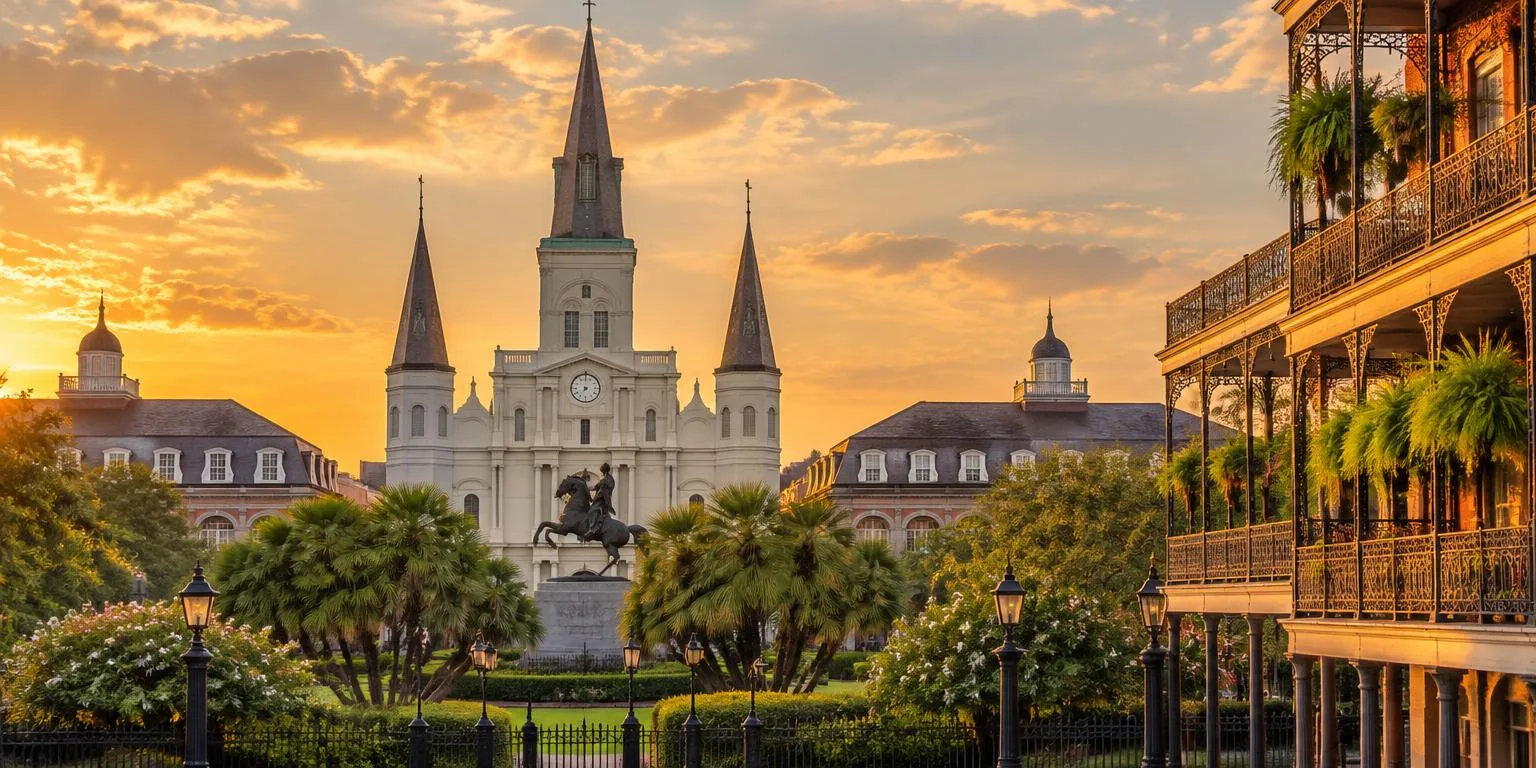
St. Louis Cathedral and the Andrew Jackson statue in Jackson Square, New Orleans, Louisiana at golden hour, framed by palms and the cast-iron balconies of the Pontalba Buildings

Best time to visit

February to May is the sweet spot: warm, dry-ish and packed with festivals — Mardi Gras (late February or early March, date moves each year), French Quarter Fest in April and Jazz Fest across late April and early May. Hotels triple during those weeks, so book early. October and November are the second-best window, mild and less crowded. June to September is hot, very humid and inside hurricane season (June–November) — cheaper, but plan indoor afternoons. December and January are cool and quiet with festive lights.

Getting around

You don't need a car — French Quarter parking is expensive and the core is walkable. RTA streetcars and buses cost US$1.25 a ride; a Jazzy Pass (1-day US$3, 3-day US$8) on the Le Pass app covers unlimited rides, including the historic St. Charles line to the Garden District and the Canal and Riverfront lines. From Louis Armstrong airport (MSY), the E2 or 202 Airport Express bus is the budget option, or a taxi is a flat rate of about US$36 for one or two people to the CBD/French Quarter. Rideshares are easy at night; walk busy, lit streets after dark.

The 3-day New Orleans, United States itinerary

Day 1

The French Quarter, beignets and Frenchmen Street jazz

  1. Morning

    beignets + coffee about US$10 · cathedral free

    Café du Monde and Jackson Square

    Start early with beignets and café au lait at Café du Monde before the line builds, then cross to Jackson Square: St. Louis Cathedral, the Cabildo and the iron-balconied Pontalba Buildings, with artists setting up along the railings. Step inside the cathedral (free) and walk the Moonwalk along the Mississippi.

    Café du Monde, 800 Decatur St, New Orleans, LA
  2. Afternoon

    museum free · muffuletta US$15–$25

    French Quarter streets and the French Market

    Wander Royal Street for antiques and street musicians, Chartres for the old Ursuline Convent, and the French Market for pralines and stalls. Grab a muffuletta to share for lunch. The Historic New Orleans Collection on Royal Street is free and gives the best short history of the Quarter.

    The Historic New Orleans Collection, 520 Royal St, New Orleans, LA
  3. Evening

    dinner US$30–$60 · cover/drink minimum US$10–$40

    Creole dinner and live jazz on Frenchmen Street

    Have dinner in the Quarter — gumbo, shrimp and grits or a classic Creole menu — then walk to Frenchmen Street in the Marigny, where locals go for music. Clubs like The Spotted Cat and Snug Harbor have live bands nightly; most ask a cover or one-drink minimum. Skip loud Bourbon Street or just walk it once.

    Frenchmen Street, New Orleans, LA
Day 2

St. Charles streetcar, the Garden District and the WWII Museum

  1. Morning

    streetcar US$1.25 or Jazzy Pass · walking free

    Streetcar to the Garden District

    Board the green St. Charles streetcar on Canal Street — the oldest continuously operating streetcar line in the world — and ride under the oaks to Washington Avenue. Walk the Garden District's Greek Revival and Italianate mansions on Prytania and First Streets, and look into Lafayette Cemetery No. 1's above-ground tombs (check current opening; entry may be by guided tour only).

    Lafayette Cemetery No. 1, 1400 Washington Ave, New Orleans, LA
  2. Afternoon

    adult admission about US$36 · film extra

    The National WWII Museum

    Ride back to the Warehouse District for the National WWII Museum, one of the country's best — allow at least three to four hours for the Road to Berlin and Road to Tokyo galleries and the Beyond All Boundaries film. Buy tickets online to save time; grab a po'boy nearby before going in.

    The National WWII Museum, 945 Magazine St, New Orleans, LA
  3. Evening

    dinner US$30–$55 · general admission about US$25–$50

    Magazine Street or a Preservation Hall set

    Have dinner in the Warehouse District or along Magazine Street, then head back to the Quarter for a 45-minute traditional jazz set at Preservation Hall — no drinks, no frills, just the music. Book a timed ticket ahead; standby lines form outside on busy nights.

    Preservation Hall, 726 St Peter St, New Orleans, LA
Day 3

Bayou swamp tour, Tremé and City Park

  1. Morning

    tour with pickup US$55–$95

    Swamp tour in the bayou

    Join a morning swamp boat tour in the wetlands of Barataria or Honey Island — roughly 40–60 minutes from the city, with hotel pickup offered by most operators. Expect alligators (most active in warm months), herons, cypress trees and Spanish moss. Choose a small covered boat over a loud airboat if you want to hear the guide.

    Jean Lafitte National Historical Park Barataria Preserve, Marrero, LA
  2. Afternoon

    sculpture garden free · NOMA admission about US$15–$20

    City Park and the sculpture garden

    Back in town, take the Canal streetcar to City Park: giant oaks, the free Besthoff Sculpture Garden beside the New Orleans Museum of Art, and beignets at Café du Monde's park outpost if you missed them. The museum itself is worth an hour if the heat sends you indoors.

    Sydney and Walda Besthoff Sculpture Garden, New Orleans, LA
  3. Evening

    park free · dinner US$20–$45

    Tremé history and a final Marigny night

    Visit Congo Square in Louis Armstrong Park, where enslaved Africans gathered to play music on Sundays — the roots of jazz — and walk past the shotgun houses of Tremé, America's oldest Black neighbourhood. Finish with fried chicken or Creole soul food, then one last set on Frenchmen Street or at a neighbourhood bar.

    Congo Square, Louis Armstrong Park, New Orleans, LA

Your trip, your pace

Make this 3-day New Orleans, United States route your own

Want a plan tailored to your travel dates, hotel base, budget or children? Start with New Orleans, United States and add the details that make the trip yours.

Customize this itinerary with AI

What 3 days in New Orleans, United States costs

Mid-range estimate: a French Quarter or CBD hotel in a shared room, beignets, po'boys and one sit-down Creole dinner a day, a jazz club cover or drink minimum, the WWII Museum and a swamp tour, plus streetcars. Hotel rates jump sharply over Mardi Gras and Jazz Fest; guesthouses in the Marigny and weekday stays keep it near the bottom. Remember hotel taxes, sales tax and tipping.

Estimated daily total

US$170–$340 per person, per day

Accommodation (per person, shared room)
US$80–$170
Food & drink
US$50–$95
Attractions, tours & music covers
US$30–$60
Transport (streetcars & rideshares)
US$5–$15

New Orleans, United States weather by season

SeasonTypical range
Spring (Mar–May)15–29°C / 59–84°F
Summer (Jun–Aug)24–33°C / 75–91°F
Autumn (Sep–Nov)15–31°C / 59–88°F
Winter (Dec–Feb)7–18°C / 45–64°F

SmartVoyage shows the live forecast, or seasonal averages for far-off dates, next to every day of a generated itinerary.

Practical tips for New Orleans, United States

  • Check the Mardi Gras date before booking — it moves every year, and hotels around Carnival and Jazz Fest sell out and triple in price months ahead.
  • Buy a Jazzy Pass on the Le Pass app: 1-day US$3 or 3-day US$8 covers every streetcar and bus, far cheaper than rideshares for the Garden District and City Park.
  • Go to Café du Monde early (it opens at 7am) or late at night; the midday queue can be 30–45 minutes for the same beignets.
  • Frenchmen Street is where locals hear music; carry small cash for tips, covers and the bands' tip jars.
  • Plan for heat and humidity from May to September: museum afternoons, water bottles and slow mornings, and keep an eye on hurricane forecasts June–November.
  • Open containers are allowed in the Quarter only in plastic cups — never glass — and walking busy, lit streets or taking a rideshare after dark is the sensible default.
  • Respect the cemeteries: don't climb tombs or mark them, and many are only open on licensed guided tours.
  • Budget for tax and tipping: hotel taxes add significantly to room rates, and 18–20% is the norm at sit-down restaurants and bars.

New Orleans, United States itinerary questions

Is 3 days enough for New Orleans?
Yes — three days covers the French Quarter, the Garden District by streetcar, the WWII Museum, a swamp tour and several nights of live jazz. Add a fourth day for a plantation tour such as Whitney Plantation or more neighbourhood eating.
Where should I stay in New Orleans?
The French Quarter puts you closest to the sights but can be noisy near Bourbon Street; the Marigny is quieter and next to Frenchmen Street; the CBD and Warehouse District are often cheaper and close to the WWII Museum and streetcars.
What is the best month to visit New Orleans?
March to May for warm weather and festivals, or October and November for mild days and fewer crowds. Summer is hot, humid and in hurricane season, though hotels are cheaper.
How do I get from the airport to the French Quarter?
A taxi from Louis Armstrong airport (MSY) is a flat rate of about US$36 for one or two passengers, taking 25–40 minutes. Rideshares are similar, and the Airport Express bus is the cheapest option.
Do I need a car in New Orleans?
No. The French Quarter, Marigny and Warehouse District are walkable, and the streetcars reach the Garden District and City Park. Swamp tours offer hotel pickup, and parking in the Quarter is costly.
What food should I try in New Orleans?
Beignets, gumbo, jambalaya, red beans and rice, a shrimp or roast beef po'boy, a muffuletta, crawfish étouffée, and boiled crawfish in spring. Pralines make the best edible souvenir.
Want this plan built around your dates?

SmartVoyage generates a personalized New Orleans, United States itinerary with your budget, interests and live weather — your first one is free, no account needed.

Plan New Orleans, United States free